
We Raised Our Hands.
Hundreds of survivors descended on Provo, Utah to march on the school that haunted their childhoods. What happened next changed the course of child welfare legislation.
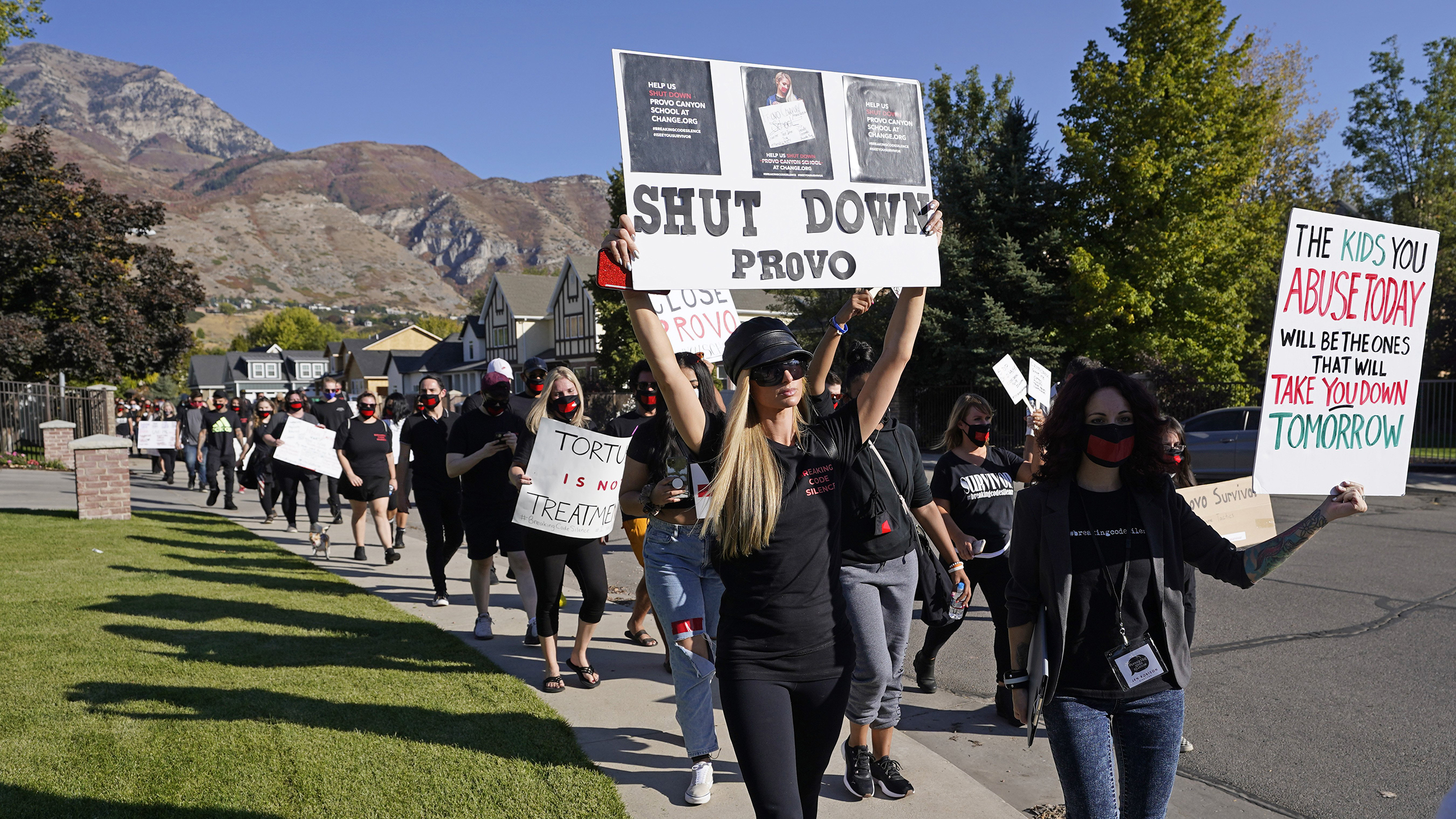
Paris Hilton returns to Provo, Utah for the first time since her teenage years at Provo Canyon School. October 9, 2020.
On October 9, 2020, something happened in Provo, Utah that the troubled teen industry had never seen before. Hundreds of survivors, wearing black t-shirts emblazoned with the words "Breaking Code Silence," gathered at Riverview Park from across the country. They came not as patients or cases or troubled kids. They came as witnesses. And they came to be seen.
The rally was organized by Breaking Code Silence, a survivor-led movement dedicated to exposing abuse in youth residential treatment programs. The occasion was extraordinary: Paris Hilton, who had recently released her documentary This Is Paris, was returning to the city where she had been sent as a teenager to Provo Canyon School, a facility she described as "the worst of the worst." It was her first time back.
"Today, I'm not here as Paris Hilton. I'm here as just another survivor who was abused, who has lived with that since the day I left."
Paris Hilton, Riverview Park, Provo, Utah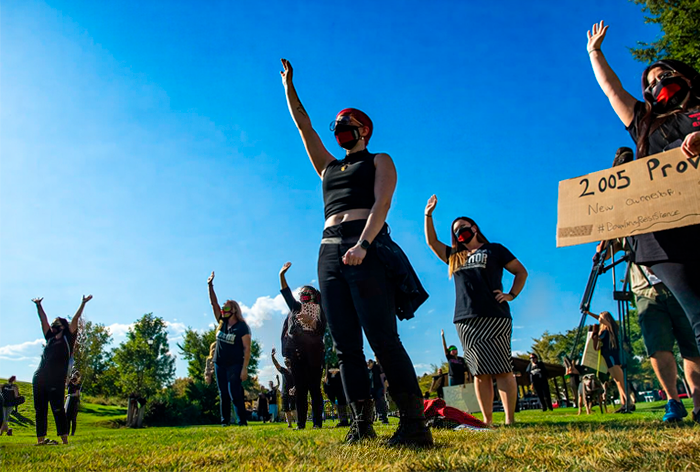
Survivors raise their hands in response to Jen Robison's question at Riverview Park, Provo, Utah. October 9, 2020.
The Moment That Defined the Day
Among the speakers was Jen Robison, co-founder of Breaking Code Silence and a Provo Canyon School survivor herself. She stepped to the front of the crowd and did something simple, and devastating.
She asked survivors to raise their hands.
"Raise your hand," Robison told the crowd, "if you are a survivor of institutional child abuse." Nearly every hand in the crowd went up, including Paris Hilton's. Then she asked them to raise their hands if they had been made to strip in front of strangers. If they had been told they were bad and unworthy. If they had witnessed staff sexually abusing children in their care.
Hand after hand, again and again.
The photograph of that moment, a sea of raised hands against the Utah sky, became one of the defining images of the movement. It was not a statistic. It was a room full of people who had survived something, refusing to be silent about it any longer.
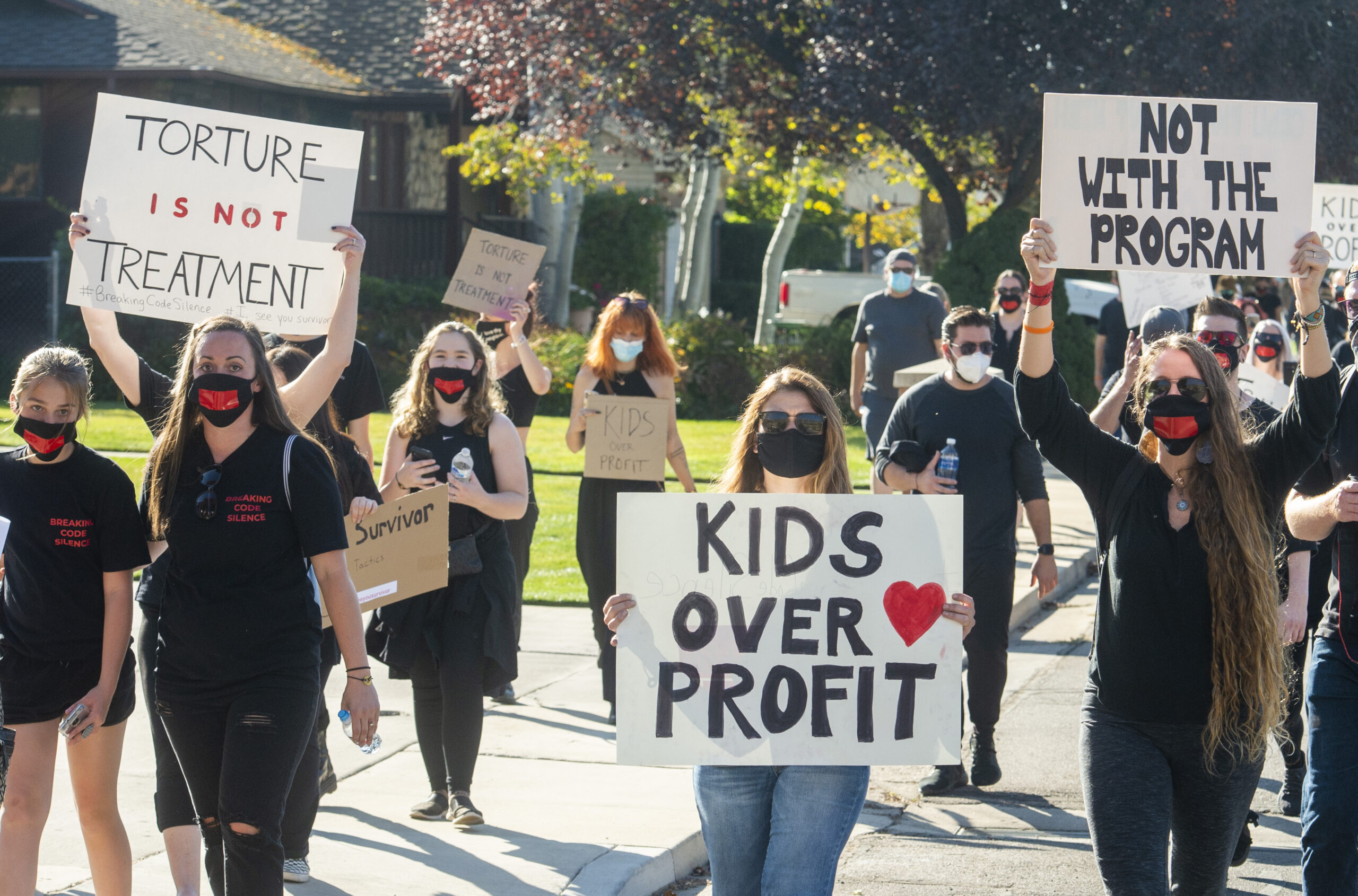
Survivors gathered from across the country at Riverview Park in Provo, Utah. October 9, 2020.
Other Voices That Day
Paris Hilton and Jen Robison were not the only ones speaking. Allen Knoll of the Bethel Boys, a survivor organization dedicated to exposing abuse at the Bethel Boys Academy in Mississippi, traveled to stand with survivors from programs across the country. His presence was a reminder that this was not a single-school problem. It was a systemic industry that had been operating with virtually no federal oversight for decades.
I was there that day as well, representing Breaking Code Silence, and I spoke about what had to come next: legislation. Bearing witness matters. Rallying matters. But protection requires the force of law. The troubled teen industry had thrived for decades in a regulatory vacuum, and filling that vacuum was the only thing that would stop the cycle from continuing for the next generation of kids.
The march that followed was silent, by design. The group walked past Provo Canyon School's boys campus without a word. The silence was not defeat. It was deliberate. The organizers wanted the children inside, if any were watching, to know that someone was out there. That survivors remembered. That they had not been forgotten.
From the Street to the Legislature
The rally created a moment of public visibility that caught the attention of Utah lawmakers. Within months, Sen. Mike McKell, a Republican from Spanish Fork, contacted Breaking Code Silence. He had been watching. He introduced Senate Bill 127, which would bring the first significant new oversight to Utah's residential treatment industry in fifteen years.
Legislative outcome
Utah Senate Bill 127 — Signed into Law, March 2021
SB 127 required treatment centers to document and report all use of physical restraints and seclusion, prohibited mechanical restraints without prior state authorization, banned the use of chemical sedation without oversight, established new non-discrimination protections for LGBTQ+ youth, and dramatically expanded reporting and inspection requirements. The Utah Senate passed the bill unanimously. It was signed into law by Utah's governor in March 2021.
Paris Hilton flew to Salt Lake City to testify before the Utah Senate Judiciary Committee in support of the bill. She told lawmakers that at Provo Canyon School, she had been given a number. "I was no longer Paris," she said. "I was only number 127." The bill's number was not lost on anyone in the room.
The bill's passage was a first step, not a finish line. There are still nearly 100 facilities operating in Utah. There is still no federal law governing the use of restraints, seclusion, or involuntary transport of minors into these programs. Children from all 50 states are still being sent to facilities with little to no meaningful oversight.
But October 9, 2020 proved something that the industry had been betting against for decades: that survivors, when they find each other, are impossible to ignore.
What You Can Do
The work of protecting children from institutional abuse continues at the federal level. ICAPA Network is dedicated to authoring and supporting legislation that closes the regulatory gaps that allow this industry to continue harming children. If you are a survivor, an advocate, or a concerned citizen, there is a role for you in this movement. Visit our legislative advocacy library to learn how to get involved, and consider signing on to support the federal ICAPA legislation currently being advanced.
The children in those facilities right now cannot raise their hands. We raise ours for them.
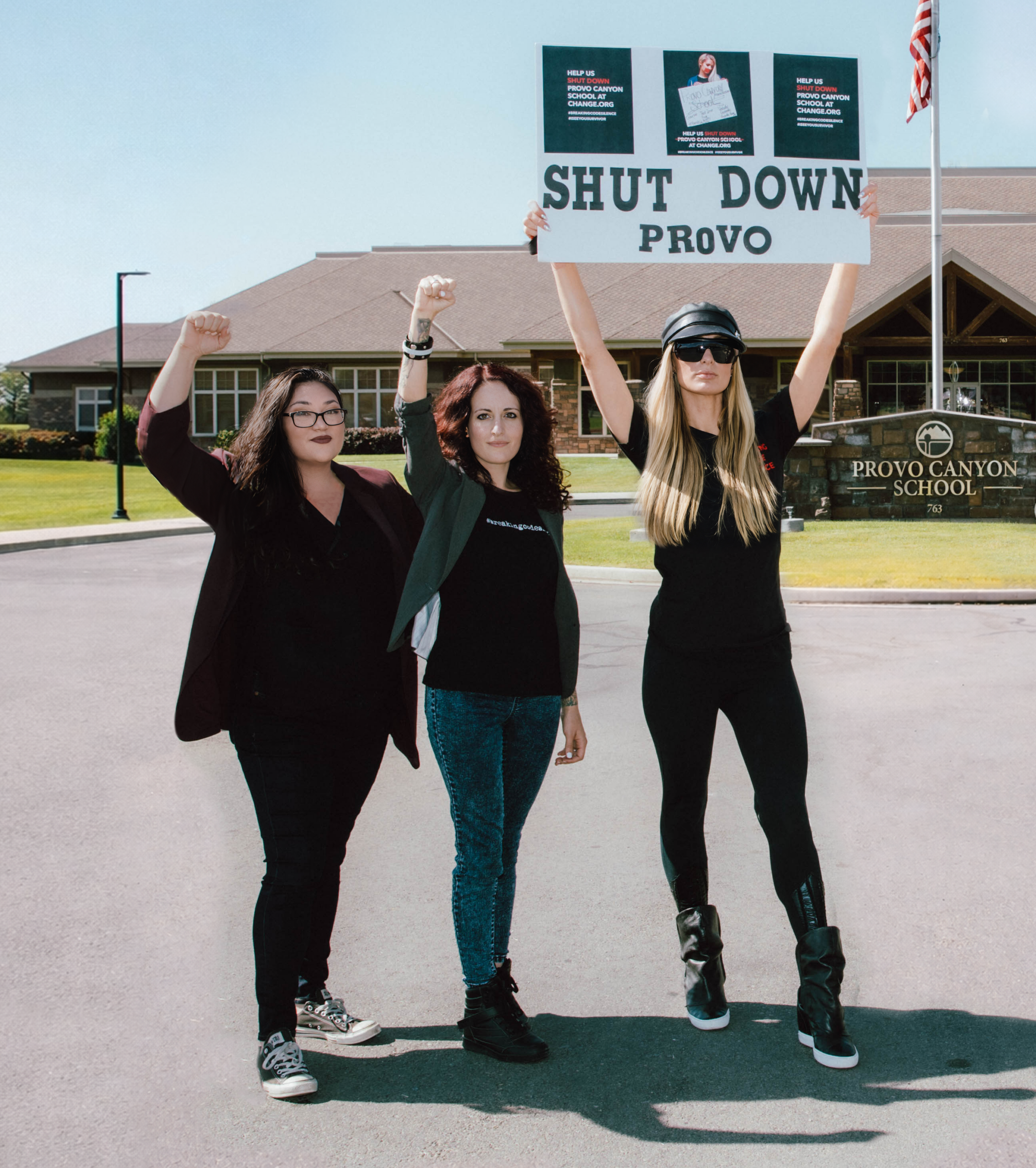
Chelsea Filer, Jen Robison (Breaking Code Silence), and Paris Hilton standing in front of Provo Canyon School. Provo, Utah. October 9, 2020.